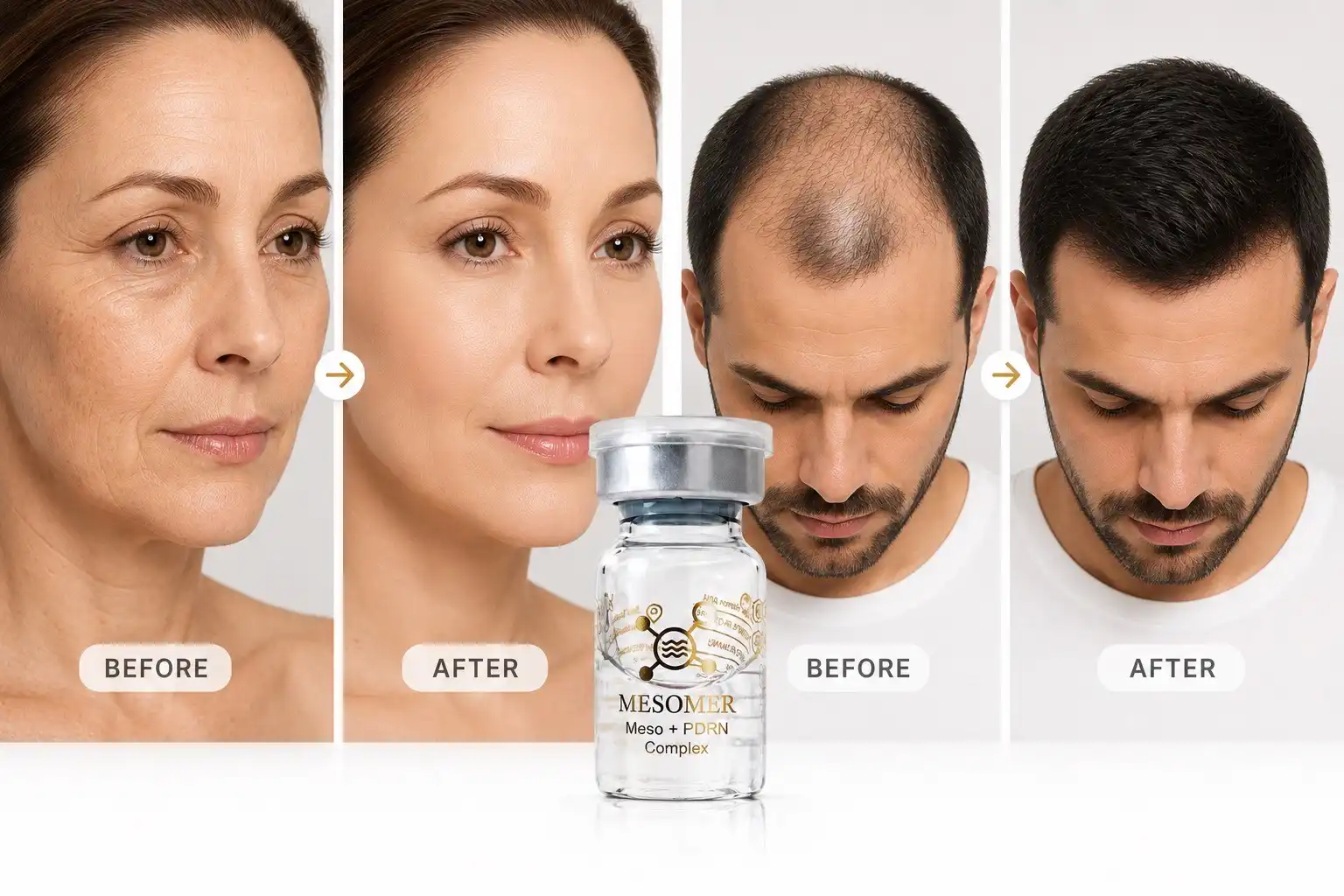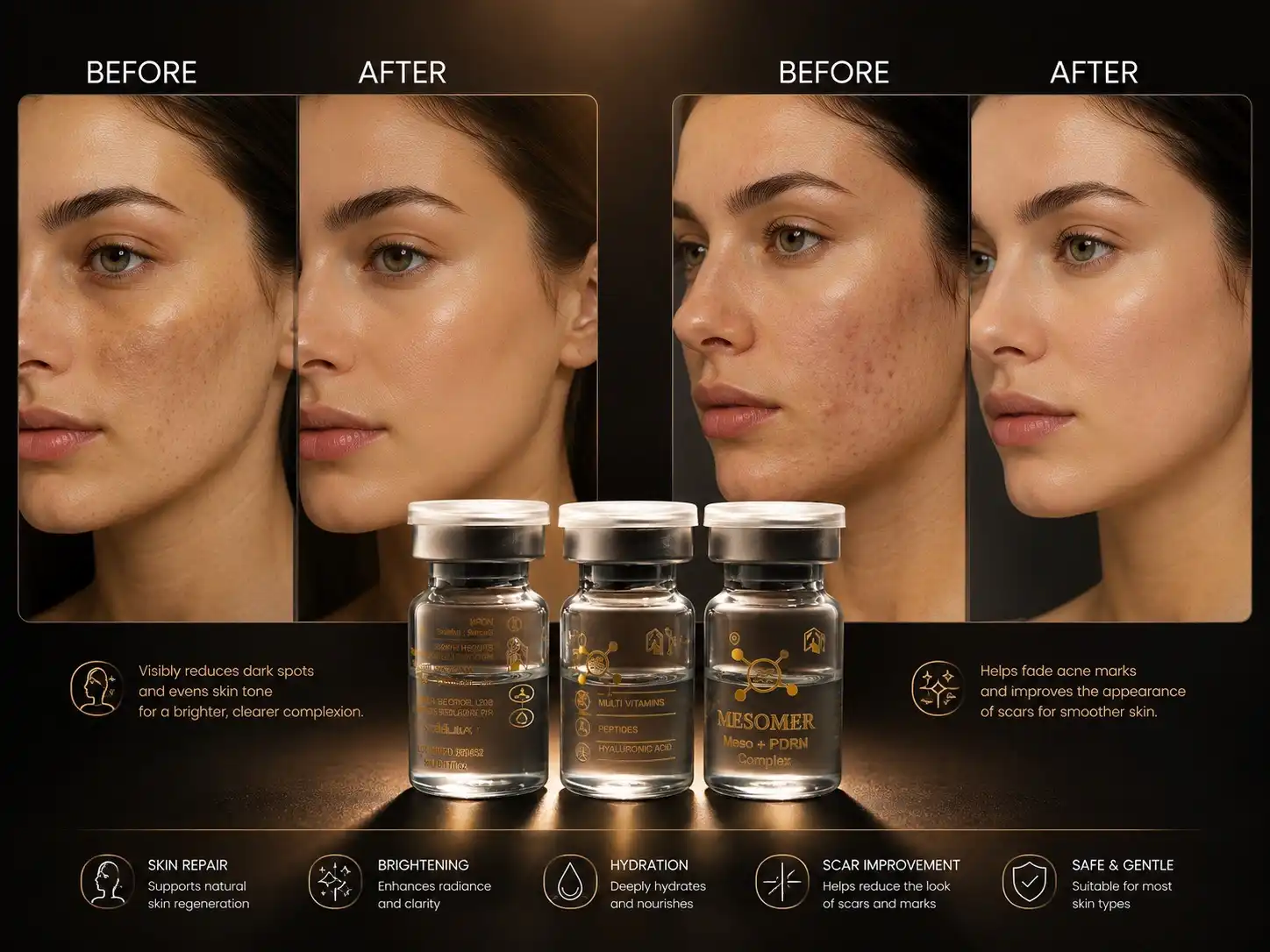

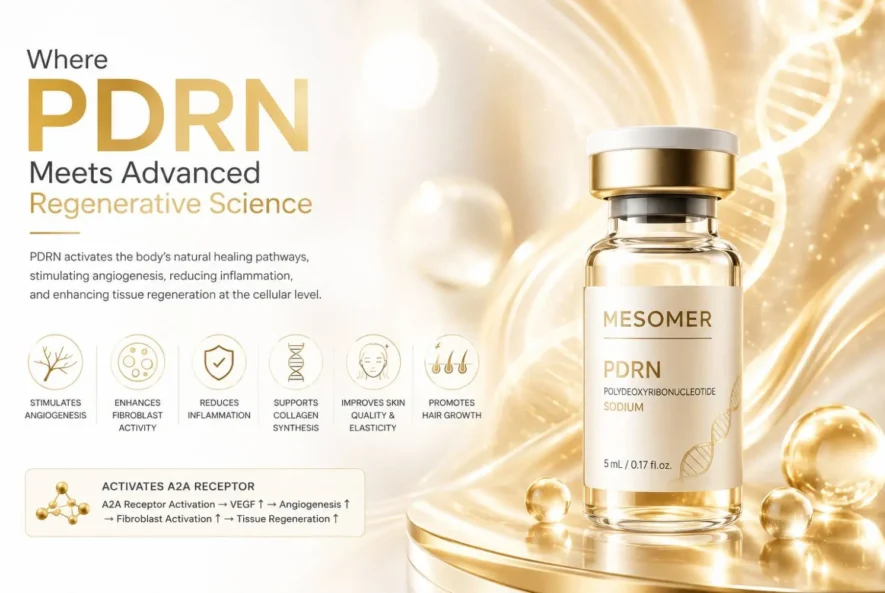
In MesoMer formulations, PDRN is only one part of a broader regenerative strategy. Alongside PDRN, additional bioactive factors contribute to a powerful regenerative complex designed to support tissue repair, cellular renewal, and skin revitalization. While PDRN has been extensively studied for its role in angiogenesis, fibroblast activation, and tissue regeneration, accumulating evidence suggests that combining regenerative pathways may further enhance clinical outcomes. The following studies highlight the scientific foundation behind PDRN and its role in modern regenerative medicine.
1) Squadrito et al. (2017)
Pharmacological Activity and Clinical Use of Polydeoxyribonucleotide (PDRN)
This review and mechanistic study aimed to explain why PDRN is effective in tissue regeneration.
The authors demonstrated that PDRN primarily exerts its effects through activation of the adenosine A2A receptor. Activation of this receptor increases the production of growth factors, particularly vascular endothelial growth factor (VEGF), thereby promoting angiogenesis. In addition, inflammatory mediators such as TNF-α and IL-6 were significantly reduced.
Animal studies reviewed in the paper showed accelerated wound closure, improved tissue perfusion, reduced necrosis, and enhanced healing in ischemic tissues.
Conclusion: PDRN is not merely a filler or mechanical stimulator. It is a biologically active molecule capable of modifying the tissue microenvironment and directing it toward regeneration.
2) Kim et al. (2020)
Scalp Mesotherapy with Polydeoxyribonucleotide for Androgenetic Alopecia
This pilot clinical study was among the first to evaluate PDRN in the treatment of androgenetic alopecia.
Patients received a series of intradermal scalp injections of PDRN, and changes in hair density and hair shaft thickness were assessed.
At the end of the treatment period, a significant increase in active hair follicles was observed. Hair shaft diameter improved in many patients, while trichoscopic images demonstrated a reduction in vellus hairs and an increase in terminal hairs. The authors suggested that enhanced VEGF expression and improved perifollicular blood supply may be responsible for these effects. However, they emphasized the need for larger clinical trials due to the limited sample size.
3) Lee et al. (2020)
Therapeutic Efficacy of Autologous PRP and PDRN on Female Pattern Hair Loss
This study compared the efficacy of platelet-rich plasma (PRP) and PDRN in women affected by female pattern hair loss.
Patients were allocated to different treatment groups and monitored over several months. Key outcomes included hair density, hair thickness, and patient satisfaction.
Both treatment modalities resulted in significant improvements in hair growth. The PDRN group demonstrated increased hair density and reduced daily hair shedding, while the PRP group also showed positive outcomes, with slight advantages in certain parameters.Conclusion: PDRN may represent a safe, repeatable, and minimally invasive therapeutic option for female pattern hair loss and may offer additional benefits when combined with PRP.
4) Polydeoxyribonucleotide: A Promising Biological Platform to Accelerate Impaired Skin Wound Healing (2021)
This comprehensive review examined the role of PDRN throughout the wound-healing process.
The authors found that PDRN contributes to multiple stages of tissue repair. During the inflammatory phase, it reduces pro-inflammatory cytokines. During the proliferative phase, it enhances fibroblast and keratinocyte migration. During the remodeling phase, it stimulates collagen synthesis.
Across diabetic, ischemic, and chronic wound models, PDRN consistently accelerated wound closure and improved both neovascularization and tissue quality.Conclusion: PDRN is considered one of the most promising non-cellular bioregenerative agents for wound healing and regenerative medicine applications.
5) The Effectiveness of Polynucleotides in Esthetic Medicine: A Systematic Review (2024)
This systematic review evaluated the use of polynucleotides in aesthetic medicine and skin rejuvenation.
The authors analyzed studies investigating skin quality, wrinkles, elasticity, hydration, and scar improvement. Most studies reported meaningful improvements in skin texture, softness, hydration, and reduction of fine lines.
One important observation was that clinical benefits typically became more noticeable after two to three months, suggesting that the effects are driven by true tissue remodeling rather than immediate volumization. Despite encouraging findings, the authors noted that many available studies involved small patient populations and lacked standardized treatment protocols.
6) Polydeoxyribonucleotides as Emerging Therapeutics for Skin Diseases (2025)
This publication provides one of the most recent overviews of PDRN applications in dermatology.
Beyond skin rejuvenation, the review explored the potential role of PDRN in inflammatory skin disorders, UV-induced damage, skin barrier dysfunction, and hair loss.
Experimental studies demonstrated reduced oxidative stress, increased type I collagen production, enhanced fibroblast activity, and upregulation of genes involved in tissue repair. Clinical studies reported improvements in skin elasticity, hydration, dermal thickness, and overall skin quality.
Conclusion: PDRN has evolved beyond a simple wound-healing agent and is increasingly recognized as a versatile therapeutic platform for a broad range of skin and hair conditions.
Overall Scientific Evidence
When the available evidence is considered collectively, the strongest biological effects of PDRN include:
- Stimulation of angiogenesis through VEGF upregulation
- Activation of the adenosine A2A receptor
- Enhancement of fibroblast activity and collagen synthesis
- Acceleration of wound healing and tissue repair
- Improvement of skin quality, elasticity, and hydration
- Increased hair density and hair shaft thickness (supported by moderate but growing evidence)
Importantly, most successful PDRN studies converge on the following regenerative pathway:
A2A Receptor Activation → VEGF ↑ → Angiogenesis ↑ → Fibroblast Activation ↑ → Tissue Regeneration ↑
This mechanism helps explain why PDRN has become one of the most promising non-cellular regenerative technologies in modern aesthetic and regenerative medicine.
References
- Squadrito F, Bitto A, Altavilla D, Arcoraci V, De Caridi G, De Feo ME, et al. Polydeoxyribonucleotide (PDRN): A pharmacological approach to tissue repair. Therapeutics and Clinical Risk Management. 2017;13:817–825.
- Kim JH, Park JH, Kim DH, et al. Scalp mesotherapy using polydeoxyribonucleotide for the treatment of androgenetic alopecia: A pilot clinical study. Journal of Cosmetic Dermatology. 2020.
- Lee HJ, Lee JH, Kim SY, et al. Therapeutic efficacy of autologous platelet-rich plasma and polydeoxyribonucleotide on female pattern hair loss. Dermatologic Therapy. 2020;33(6).
- Galeano M, Bitto A, Altavilla D, Minutoli L, Polito F, Calò M, et al. Polydeoxyribonucleotide: A promising biological platform to accelerate impaired skin wound healing. International Journal of Molecular Sciences. 2021;22(21):11871.
- Cavallini M, Papagni M, Trocchi G, et al. The Effectiveness of Polynucleotides in Esthetic Medicine: A Systematic Review. Aesthetic Plastic Surgery. 2024.
- Kim YS, Park SH, Lee JH, et al. Polydeoxyribonucleotides as Emerging Therapeutics for Skin Diseases: Mechanisms and Clinical Applications. Applied Sciences. 2025;15(19):10437.