
A Multi-Modal Regenerative Approach Beyond Volume, Hydration, and Stimulation
In modern aesthetic medicine, treatment goals are evolving beyond temporary hydration, superficial stimulation, or volume correction. Today, clinicians are increasingly focused on improving tissue quality, cellular signaling, microenvironment balance, inflammation control, and regenerative capacity.
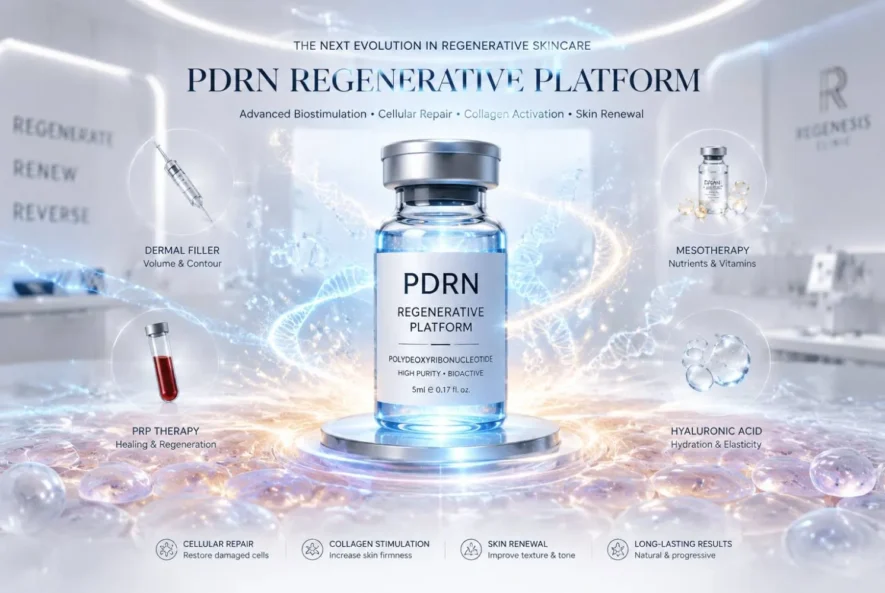
While dermal fillers, PRP, classic mesotherapy, and skin boosters each have specific clinical value, MesoMer™ offers a broader regenerative concept by combining:
- Advanced PDRN
- Growth Factors
- Biomimetic Peptides
- Hyaluronic Acid
- Amino Acids
- Vitamins
- Antioxidants
This multi-component composition positions MesoMer™ as a regenerative biostimulation platform designed to support skin and scalp quality at multiple biological levels.
1. MesoMer™ vs. Dermal Fillers
How Dermal Fillers Work
Dermal fillers, particularly cross-linked hyaluronic acid fillers, are primarily designed for:
- Volume restoration
- Facial contouring
- Deep wrinkle correction
- Structural enhancement
- Soft tissue augmentation
Their main mechanism is physical volumization. Fillers create immediate visible improvement by occupying space within the tissue.
Limitations of Dermal Fillers
Although dermal fillers are highly effective for volume correction, they are not primarily designed to improve the biological quality of the skin.
They generally have limited direct effects on:
- Chronic skin microinflammation
- Cellular repair mechanisms
- Fibroblast signaling
- Extracellular matrix regeneration
- Microcirculation
- Scalp or follicular microenvironment
In other words, fillers may improve facial architecture, but they do not necessarily address the underlying cellular and tissue-level factors that contribute to aging, dullness, thinning skin, or poor regenerative response.
How MesoMer™ Is Different
MesoMer™ does not act as a volumizing filler. Instead, it is designed to support the skin’s regenerative environment.
Through its combination of PDRN, growth factors, peptides, hyaluronic acid, amino acids, vitamins, and antioxidants, MesoMer™ targets multiple regenerative pathways, including:
- Tissue repair support
- Fibroblast activation
- Extracellular matrix remodeling
- Microcirculation enhancement
- Inflammation modulation
- Cellular recovery and renewal
Clinical Positioning
Dermal fillers are ideal when the goal is volume restoration and contour correction.
MesoMer™ is more appropriate when the clinical objective is to improve:
- Skin quality
- Texture
- Elasticity
- Radiance
- Post-procedure recovery
- Scalp environment
- Regenerative tissue response
For this reason, fillers and MesoMer™ are not necessarily competitors. In many advanced aesthetic protocols, they may be used as complementary treatments: fillers restore structure, while MesoMer™ supports tissue quality.
2. MesoMer™ vs. PRP
Platelet-Rich Plasma (PRP) is widely used in aesthetic and regenerative medicine. It is an autologous treatment derived from the patient’s own blood and contains platelets that release growth factors involved in healing and tissue repair.
Advantages of PRP
PRP has several recognized advantages:
- Autologous origin
- Contains endogenous growth factors
- Widely used in skin and hair protocols
- Supports tissue repair and wound healing
- Can be combined with other aesthetic procedures
Limitations of PRP
Despite its popularity, PRP has important limitations.
1. Patient-Dependent Variability
The quality and biological activity of PRP can vary significantly from one patient to another. PRP outcomes may be influenced by:
- Age
- Platelet count
- General health status
- Chronic inflammation
- Metabolic conditions
- Medications
- Smoking
- Nutrition
- Lifestyle factors
- Preparation technique
This means PRP is a highly patient-dependent treatment, and its composition may not be consistent across individuals or treatment sessions.
2. Lack of Standardized Composition
PRP is not a single uniform product. Different devices, centrifugation protocols, platelet concentrations, leukocyte content, and preparation methods can produce significantly different PRP formulations.
As a result, clinical outcomes may be less predictable.
3. Additional Procedural Steps
PRP requires:
- Blood collection
- Centrifugation
- Processing time
- Special preparation equipment
- Handling of biological material
How MesoMer™ Offers a More Standardized Regenerative Option
MesoMer™ is formulated as a ready-to-use, multi-component regenerative solution with a defined composition.
Unlike PRP, MesoMer™ is not dependent on the patient’s platelet quality or blood-derived growth factor concentration.
It contains a combination of active and supportive ingredients including:
- PDRN
- Growth Factors
- Biomimetic Peptides
- Hyaluronic Acid
- Amino Acids
- Vitamins
- Antioxidants
This makes MesoMer™ a more standardized and predictable option for clinicians seeking a consistent regenerative protocol.
The Key Advantage: PDRN-Based Regeneration
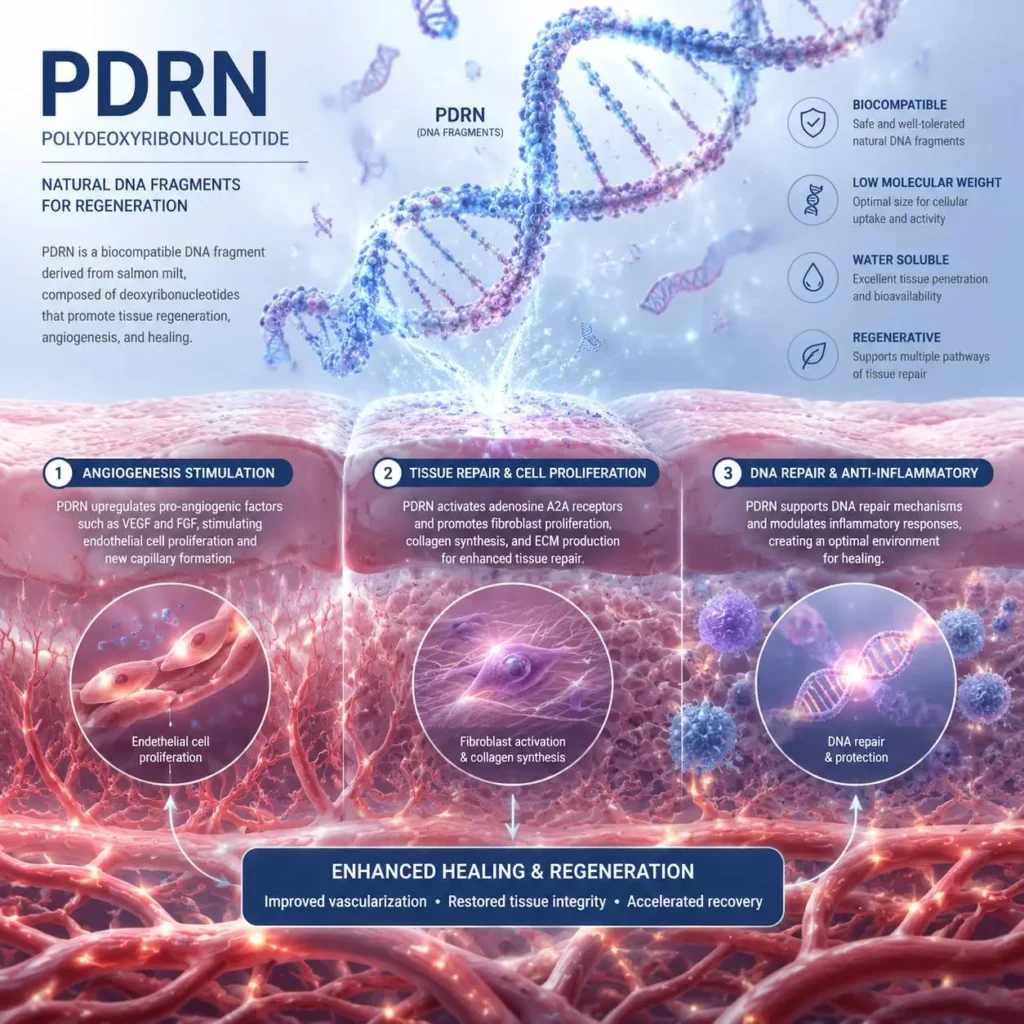
One of the central advantages of MesoMer™ is the presence of PDRN.
PDRN has been studied for its ability to support tissue repair through mechanisms including:
- Activation of the adenosine A2A receptor
- Modulation of inflammatory pathways
- Support of angiogenesis
- Enhancement of wound healing processes
- Promotion of tissue regeneration
- Support of the nucleotide salvage pathway
This mechanism gives MesoMer™ a broader biological profile than PRP alone, especially when combined with growth factors, peptides, HA, and antioxidants.
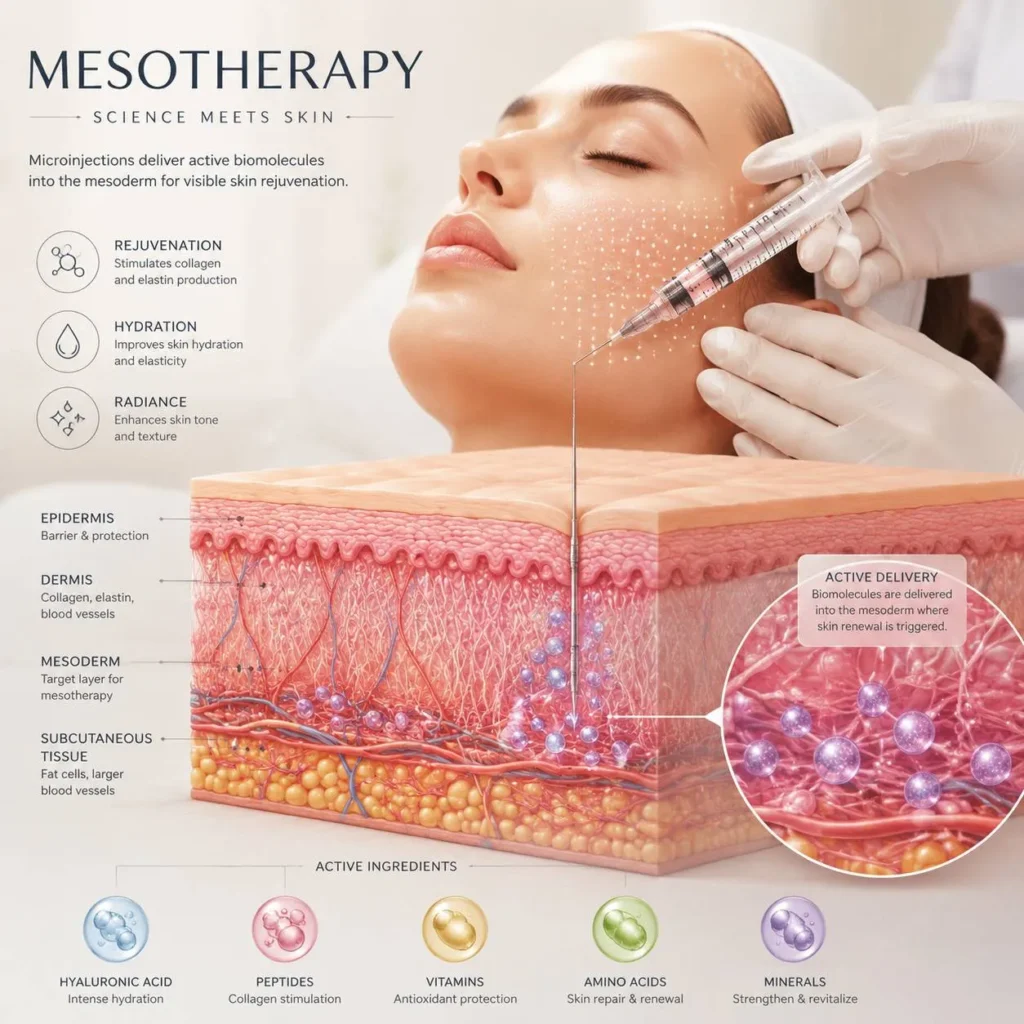
3. MesoMer™ vs. Classic Mesotherapy
Classic mesotherapy typically involves intradermal delivery of supportive substances such as:
- Vitamins
- Amino acids
- Minerals
- Coenzymes
- Hydrating agents
- Trace elements
These formulas can support skin metabolism and hydration.
Limitations of Classic Mesotherapy
Most conventional mesotherapy cocktails are primarily nutritional or supportive. They may help refresh the skin, but they often lack advanced regenerative signaling molecules.
Classic mesotherapy formulas may have limited impact on:
- Targeted inflammation modulation
- A2A receptor-mediated repair pathways
- Angiogenic signaling
- Deep extracellular matrix remodeling
- Follicular microenvironment optimization
- Multi-pathway tissue regeneration
How MesoMer™ Goes Beyond Classic Mesotherapy
MesoMer™ includes the supportive elements found in mesotherapy, but adds a higher-level regenerative architecture through:
- Advanced PDRN
- Growth Factors
- Biomimetic Peptides
- Hyaluronic Acid
- Antioxidants
- Amino Acids and Vitamins
This means MesoMer™ is not simply a nutritional mesotherapy solution. It is designed as a bioactive regenerative platform that supports cellular communication, repair signaling, microenvironment improvement, and tissue remodeling.
Practical Difference
Classic mesotherapy mainly provides cellular support.
MesoMer™ provides:
- Cellular support
- Regenerative signaling
- Anti-inflammatory modulation
- Hydration
- ECM support
- Microcirculation support
Scalp and skin microenvironment optimization
4. MesoMer™ vs. Skin Boosters
Skin boosters are usually based on non-cross-linked hyaluronic acid and are primarily designed to improve skin hydration and surface quality.
Benefits of Skin Boosters
Skin boosters may help improve:
- Skin hydration
- Smoothness
- Elasticity
- Radiance
- Fine superficial lines
They are especially useful for patients with dry, dull, or dehydrated skin.
Limitations of Skin Boosters
However, most skin boosters are mainly hydration-focused. While hydration is important, it does not fully address all biological contributors to skin aging.
Skin boosters generally have limited direct effects on:
- Inflammatory signaling
- Angiogenesis
- Fibroblast repair signaling
- Nucleotide salvage pathways
- Tissue regeneration
- Scalp follicular environment
- Oxidative stress modulation
How MesoMer™ Expands the Concept of a Skin Booster
MesoMer™ contains hyaluronic acid, but it is not limited to hydration.
Its broader formula includes:
- PDRN for regenerative and anti-inflammatory support
- Growth Factors for cellular signaling
- Peptides for ECM and collagen-related support
- Amino acids and vitamins for metabolic support
- Antioxidants for oxidative stress protection
- HA for hydration and tissue comfort
This makes MesoMer™ a more comprehensive solution when the goal is not only to hydrate the skin, but also to support biological regeneration and tissue quality improvement.
5. MesoMer™ vs. Microneedling Alone
Microneedling, also known as collagen induction therapy, works by creating controlled micro-injuries in the skin. This triggers the body’s natural wound-healing cascade and stimulates collagen production.
Benefits of Microneedling
Microneedling can help with:
- Texture improvement
- Fine lines
- Acne scars
- Mild skin laxity
- Collagen induction
- Enhanced topical absorption
Limitations of Microneedling Alone
Microneedling relies heavily on the patient’s own healing capacity. The response may vary based on:
- Age
- Skin condition
- Inflammatory status
- Nutrition
- Chronic stress
- Hormonal factors
- General regenerative potential
Microneedling creates the biological “signal” for repair, but it does not necessarily provide advanced regenerative ingredients.
Why Combining MesoMer™ with Microneedling May Be More Powerful
When used in professional protocols, MesoMer™ can complement microneedling by supplying bioactive regenerative components such as:
- PDRN
- Growth factors
- Peptides
- HA
- Amino acids
- Antioxidants
Microneedling initiates controlled stimulation.
MesoMer™ helps provide the regenerative support system.
Put simply: microneedling rings the repair bell; MesoMer™ brings the repair crew, the tools, and the building materials.
6. MesoMer™ vs. Single-Ingredient Growth Factor Products
Some aesthetic products focus mainly on one category of active ingredient, such as growth factors or peptides.
While growth factors are important, skin aging and hair thinning are multi-factorial processes involving:
- Inflammation
- Oxidative stress
- Reduced microcirculation
- Fibroblast dysfunction
- ECM degradation
- Cellular senescence
- Follicular microenvironment changes
Why a Multi-Component Formula Matters
MesoMer™ is designed with a multi-modal strategy. Instead of relying on a single biological pathway, it supports several interconnected regenerative processes through:
- PDRN-mediated repair signaling
- Growth factor activity
- Peptide-based ECM support
- HA-based hydration
- Antioxidant protection
- Amino acid and vitamin-based metabolic support
This makes it better aligned with the complex biology of skin aging and scalp health.
Comparative Overview
| Treatment Category | Main Purpose | Primary Mechanism | Key Limitation | MesoMer™ Advantage |
| Dermal Fillers | Volume and contour | Physical volumization | Limited effect on tissue biology | Supports tissue quality and regeneration |
| PRP | Autologous regeneration | Platelet-derived growth factors | Patient-dependent variability | Standardized multi-component formula |
| Classic Mesotherapy | Nutritional support | Vitamins, amino acids, minerals | Limited regenerative signaling | Adds PDRN, growth factors, peptides |
| Skin Boosters | Hydration | Hyaluronic acid | Mainly hydration-focused | Hydration + regenerative support |
| Microneedling Alone | Collagen induction | Controlled micro-injury | Depends on patient healing capacity | Supplies regenerative active ingredients |
| Single Growth Factor Products | Cellular stimulation | One or limited signaling pathway | Narrow biological scope | Multi-pathway regenerative strategy |
Why MesoMer™ Stands Out
MesoMer™ stands out because it combines several scientifically relevant regenerative components in one professional formula.
Its key advantages include:
- PDRN-based regenerative signaling
- Anti-inflammatory support
- Angiogenesis and microcirculation support
- Growth factor-mediated cellular communication
- Peptide-supported ECM remodeling
- HA-based hydration
- Antioxidant protection
- Amino acid and vitamin metabolic support
- Standardized and ready-to-use composition
- Potential application in both skin and scalp protocols
Unlike treatments that focus only on volume, hydration, or stimulation, MesoMer™ is positioned as a multi-modal regenerative solution designed to support the biological conditions required for healthier-looking skin and improved scalp environment.
Scientific References
- Galeano M, Bitto A, Altavilla D, et al.
Polydeoxyribonucleotide stimulates angiogenesis and wound healing in the genetically diabetic mouse.
Wound Repair and Regeneration. 2008;16(2):208–217.
- Veronesi F, Dallari D, Sabbioni G, Carubbi C, Martini L, Fini M.
Polydeoxyribonucleotide: A Promising Biological Platform to Accelerate Impaired Wound Healing and Tissue Regeneration.
Cells. 2021;10(11):2953.
- Bitto A, Oteri G, Pisano M, et al.
Polydeoxyribonucleotide Regulation of Inflammation.
Mediators of Inflammation. 2020;2020:9413908.
- Altavilla D, Bitto A, Polito F, et al.
Polydeoxyribonucleotide (PDRN): A Safe Approach to Induce Therapeutic Angiogenesis in Peripheral Artery Occlusive Disease and in Diabetic Foot Ulcers.
Cardiovascular & Hematological Agents in Medicinal Chemistry. 2009;7(4):313–321.
- Squadrito F, Bitto A, Altavilla D.
The pharmacological activity and clinical use of PDRN.
Molecules. 2017;22(8):1221.
- Kim YJ, et al.
Effect of polydeoxyribonucleotide on angiogenesis and wound healing.
Published clinical and experimental research on PDRN-related tissue repair mechanisms.
- Cavallini M, Papagni M, Ryder TJ, Bartoletti E.
Polynucleotides in Aesthetic Medicine: A Review of Current Practices and Perceived Effectiveness.
Aesthetic Surgery Journal Open Forum. 2024.
- Marx RE.
Platelet-rich plasma: evidence to support its use.
Journal of Oral and Maxillofacial Surgery. 2004;62(4):489–496.
- Sclafani AP.
Platelet-rich fibrin matrix for improvement of deep nasolabial folds.
Journal of Cosmetic Dermatology. 2010;9(1):66–71.
- Emer J.
Platelet-rich plasma therapy in dermatology and aesthetic medicine.
Published reviews on clinical applications and limitations of PRP in dermatology.
- Funt D, Pavicic T.
Dermal fillers in aesthetics: an overview of adverse events and treatment approaches.
Clinical, Cosmetic and Investigational Dermatology. 2013;6:295–316.
- Bukhari SNA, Roswandi NL, Waqas M, et al.
Hyaluronic acid, a promising skin rejuvenating biomedicine: A review of recent updates and pre-clinical and clinical investigations.
International Journal of Biological Macromolecules. 2018;120(Pt B):1682–1695.