
2026 Article Review: Clinical Evidence on PN and PDRN in Skin Rejuvenation, Scar Management, and Wound Healing
In recent years, aesthetic and regenerative dermatology has increasingly shifted from treatments that provide primarily temporary cosmetic improvement toward approaches designed to support the skin’s intrinsic regenerative processes.
Among the bioactive compounds receiving growing attention are Polynucleotides (PNs) and Polydeoxyribonucleotides (PDRNs)—DNA-derived molecules investigated for their potential roles in tissue repair, skin rejuvenation, extracellular matrix remodeling, angiogenesis, and modulation of inflammatory responses.
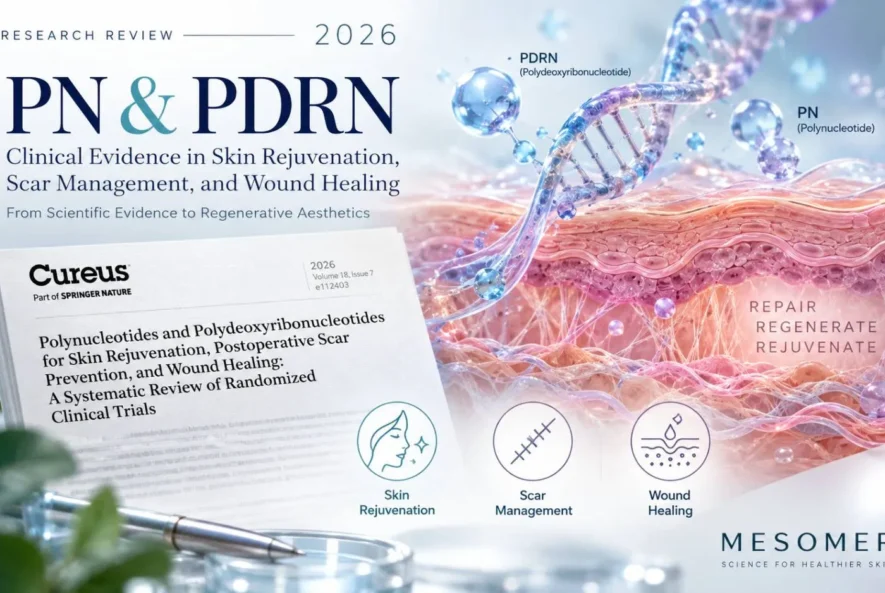
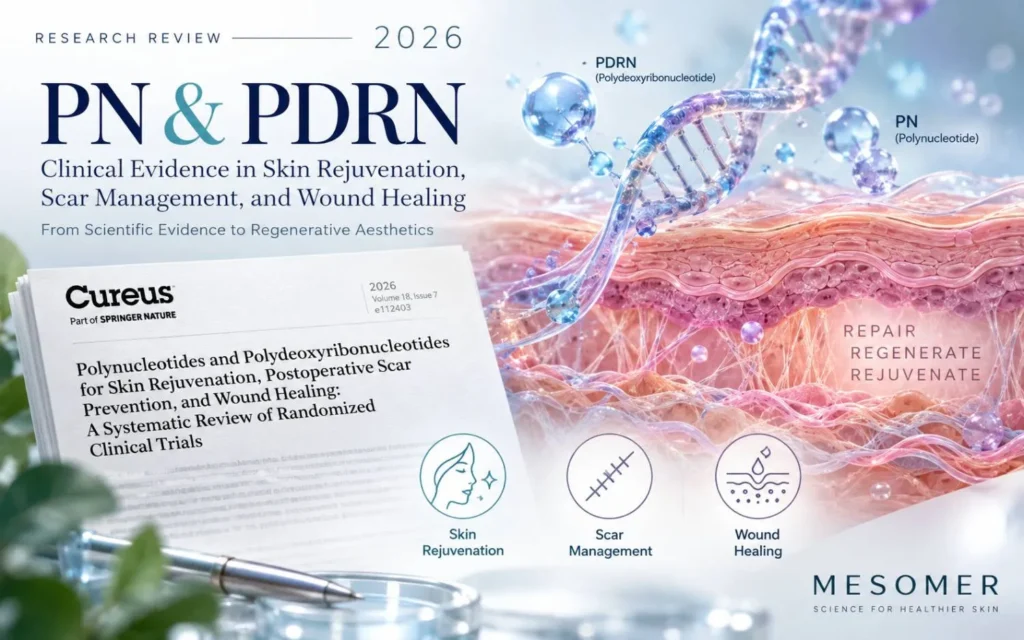
A systematic review published in 2026 evaluated randomized clinical evidence on PN- and PDRN-based interventions across three major dermatological applications: skin rejuvenation, postoperative scar prevention, and wound healing.
What Did the 2026 Systematic Review Investigate?
The review analyzed randomized clinical trials evaluating the efficacy and safety of PN- and PDRN-based treatments.
The authors searched PubMed, Embase, and the Cochrane Central Register of Controlled Trials (CENTRAL) through January 2026.
A total of seven randomized clinical trials involving 183 participants met the inclusion criteria:
Four studies investigated skin rejuvenation.
One study evaluated postoperative scar prevention.
Two studies assessed wound-healing applications.
Because of substantial differences in study populations, formulations, treatment protocols, delivery methods, outcome measures, and follow-up periods, the authors performed a structured qualitative synthesis rather than a quantitative meta-analysis.
How May PN and PDRN Support Tissue Regeneration?
The regenerative effects associated with nucleotide-based therapies appear to involve several interconnected biological mechanisms.
Adenosine-Dependent Signaling
PDRN has been associated with activation of adenosine receptor-mediated signaling, particularly pathways involving the A2A receptor.
Activation of this pathway has been linked to modulation of inflammatory responses and increased expression of pro-regenerative factors such as vascular endothelial growth factor (VEGF).
These effects may contribute to the development of a tissue environment that supports angiogenesis, cellular activity, and repair.
The Nucleotide Salvage Pathway
Following degradation, PDRN-derived nucleotides and nucleosides may become available for reutilization through the nucleotide salvage pathway.
This mechanism may be particularly relevant in damaged or metabolically stressed tissues, where proliferating cells require nucleotide precursors to support DNA synthesis and cellular repair.
Fibroblasts and Extracellular Matrix Remodeling
Fibroblasts are central to the structural integrity of the dermis and play an essential role in the production and organization of extracellular matrix components.
Experimental and clinical literature suggests that nucleotide-based therapies may support fibroblast activity and influence processes involved in extracellular matrix remodeling and dermal biostimulation.
These mechanisms provide part of the biological rationale for investigating PN and PDRN not simply as cosmetic injectables, but as potential regenerative and biostimulatory agents.
What Does the Clinical Evidence Show?
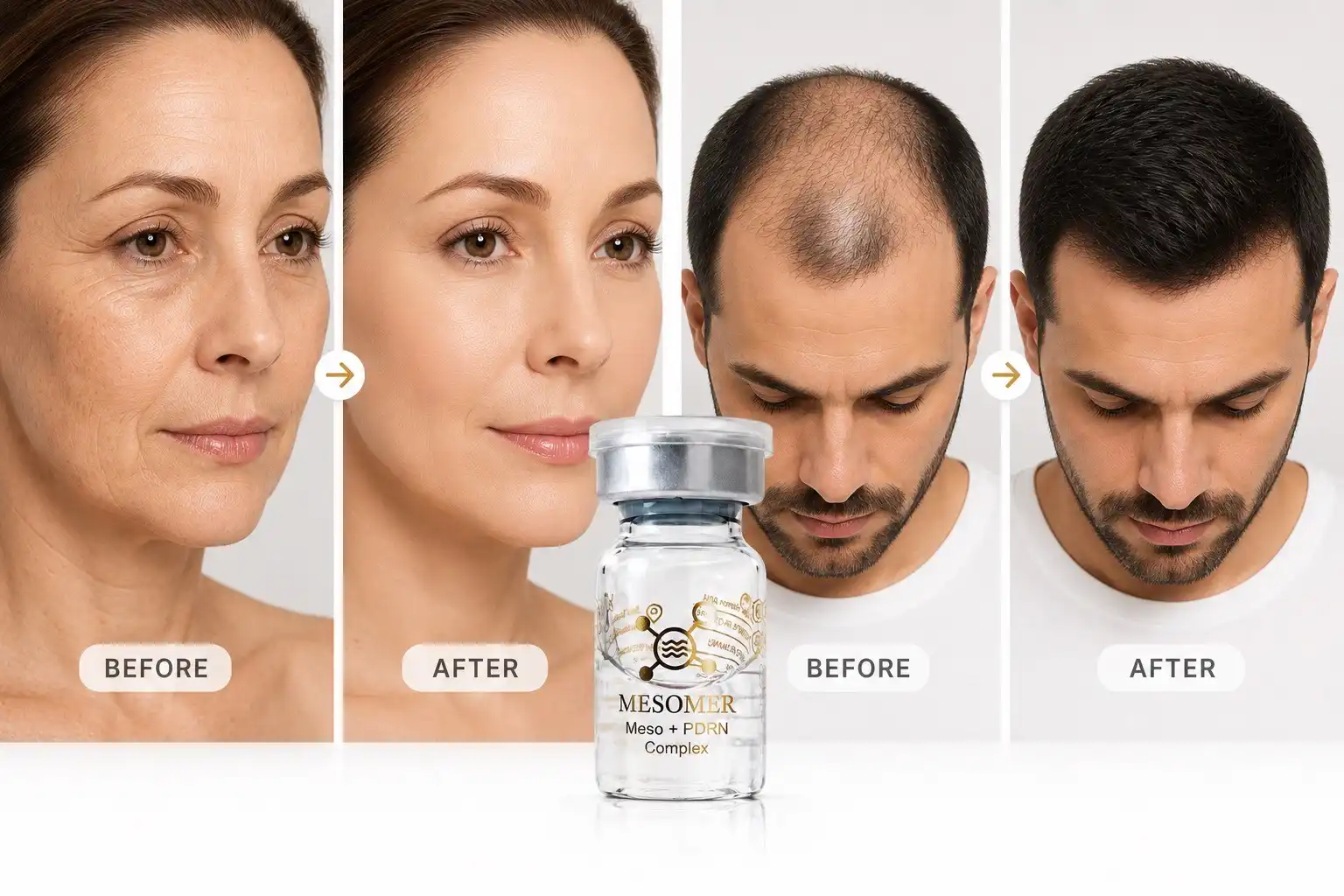
Across the seven randomized trials included in the 2026 systematic review, PN- and PDRN-based interventions demonstrated favorable outcomes in several clinical parameters.
Reported improvements included wrinkle-related outcomes, scar quality, wound-healing measures, and patient-reported satisfaction.
However, the magnitude and consistency of the effects differed according to the clinical indication.
Skin Rejuvenation
Four randomized trials evaluated nucleotide-based interventions for aesthetic skin rejuvenation.
Overall, these studies reported improvements in parameters related to wrinkles and skin quality, while maintaining generally favorable tolerability profiles.
These findings support the potential role of PN-based interventions as biostimulatory approaches in regenerative aesthetics.
Postoperative Scar Management
One randomized trial evaluated PN-based treatment for postoperative scar prevention.
The findings suggested improvements in several scar-related parameters, supporting the hypothesis that nucleotide-based interventions may influence tissue remodeling during scar maturation.
Wound Healing
The most consistent clinical benefits identified in the systematic review were observed in wound-healing applications.
PDRN-based interventions were associated with accelerated re-epithelialization and shorter healing times compared with control treatments in the included wound-healing studies.
This observation is particularly important because wound repair represents an active regenerative process involving inflammation, angiogenesis, cellular proliferation, extracellular matrix formation, and tissue remodeling.
The biological activity of PDRN may therefore be especially relevant in tissues undergoing active repair.
What About Safety?
Across the randomized trials included in the systematic review, no serious treatment-related adverse events were reported.
Overall, PN- and PDRN-based interventions demonstrated favorable tolerability profiles.
Nevertheless, the current evidence base remains relatively small, and larger studies with longer follow-up periods are still required to characterize uncommon adverse events and establish long-term safety more comprehensively.
From Skin Rejuvenation to Regenerative Aesthetics
The growing interest in PN and PDRN reflects a broader evolution in aesthetic medicine.
Rather than focusing exclusively on temporary correction of visible signs of aging, Regenerative Aesthetics aims to influence the biological environment of the skin and support its endogenous repair and remodeling mechanisms.
From this perspective, nucleotide-based compounds are particularly interesting because their proposed biological effects intersect with several key components of tissue regeneration, including:
cellular activity, inflammatory modulation, angiogenesis, fibroblast function, and extracellular matrix remodeling.
This biological framework also provides a rationale for investigating PN and PDRN alongside other bioactive approaches used in mesotherapy and skin biostimulation.
What Are the Limitations of the Evidence?
Despite promising results, the authors of the 2026 systematic review emphasized several important limitations.
The available randomized trials involved relatively small patient populations and differed substantially in formulation, dosage, administration technique, treatment frequency, comparator groups, follow-up duration, and clinical outcome measures.
Importantly, there is currently no sufficiently standardized PN or PDRN treatment protocol that can be considered optimal across all dermatological applications.
Direct comparisons between PN and PDRN are also limited.
Therefore, while the available evidence supports their regenerative potential, larger and adequately powered randomized controlled trials using standardized protocols are needed to determine the most appropriate indications, formulations, doses, and treatment strategies.
Conclusion
The 2026 systematic review provides encouraging randomized clinical evidence supporting the potential role of PN and PDRN in regenerative dermatology.
Clinical benefits were reported across skin rejuvenation, postoperative scar management, and wound healing, with the most consistent effects observed in wound-healing applications.
The emerging evidence suggests that nucleotide-based therapies may represent more than conventional cosmetic treatments. Through mechanisms associated with cellular regeneration, angiogenesis, inflammatory modulation, and extracellular matrix remodeling, they may contribute to a broader transition toward biologically driven regenerative aesthetics.
At the same time, the evidence remains evolving. Standardized formulations, larger randomized clinical trials, and longer follow-up periods will be essential to define their optimal clinical role.
Reference
Alhussain AM, Albusayys STM, Alfhadi MA, et al. Polynucleotides and Polydeoxyribonucleotides for Skin Rejuvenation, Postoperative Scar Prevention, and Wound Healing: A Systematic Review of Randomized Clinical Trials. Cureus. 2026;18(7). doi:10.7759/cureus.112403.