
Before embryo transfer, the embryo is not the only factor that matters — the implantation environment matters too. 🧬
Successful ART depends on a precisely coordinated dialogue between the embryo and a receptive endometrium.
ZYGOMER | PDRN
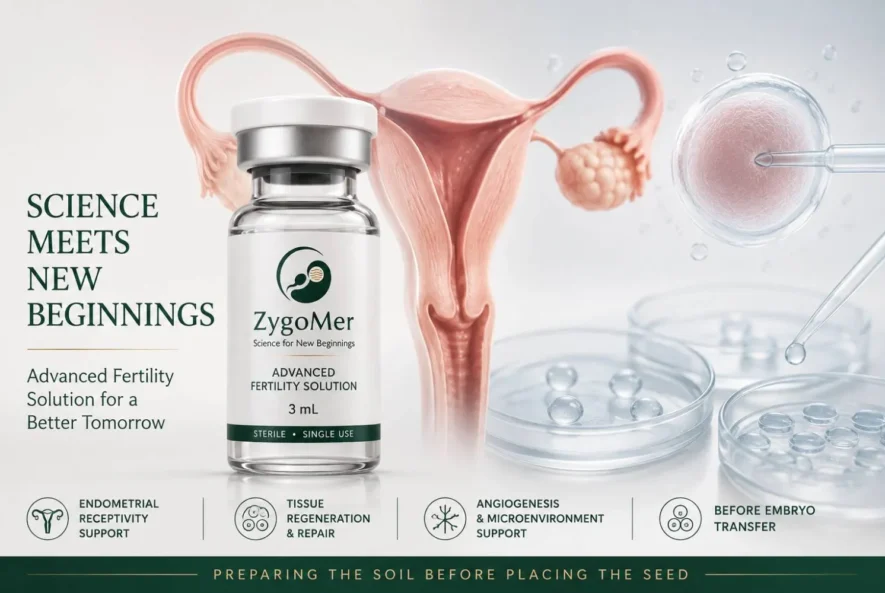
Developed with a regenerative medicine approach, ZYGOMER is designed to support tissue regeneration and optimize the endometrial microenvironment.
Through biological pathways associated with Adenosine A2A receptor signaling and nucleotide availability via the salvage pathway, PDRN has the potential to support:
- Tissue regeneration
- Angiogenic signaling
- Modulation of inflammation
- Cellular repair
In the evolving field of regenerative reproductive medicine, an important question is emerging:
Can we prepare the endometrium before we transfer the embryo?
Regenerative strategies administered prior to Embryo Transfer or as part of Assisted Reproductive Technologies (ART) may open new avenues for investigating endometrial quality and receptivity, particularly in selected patients.
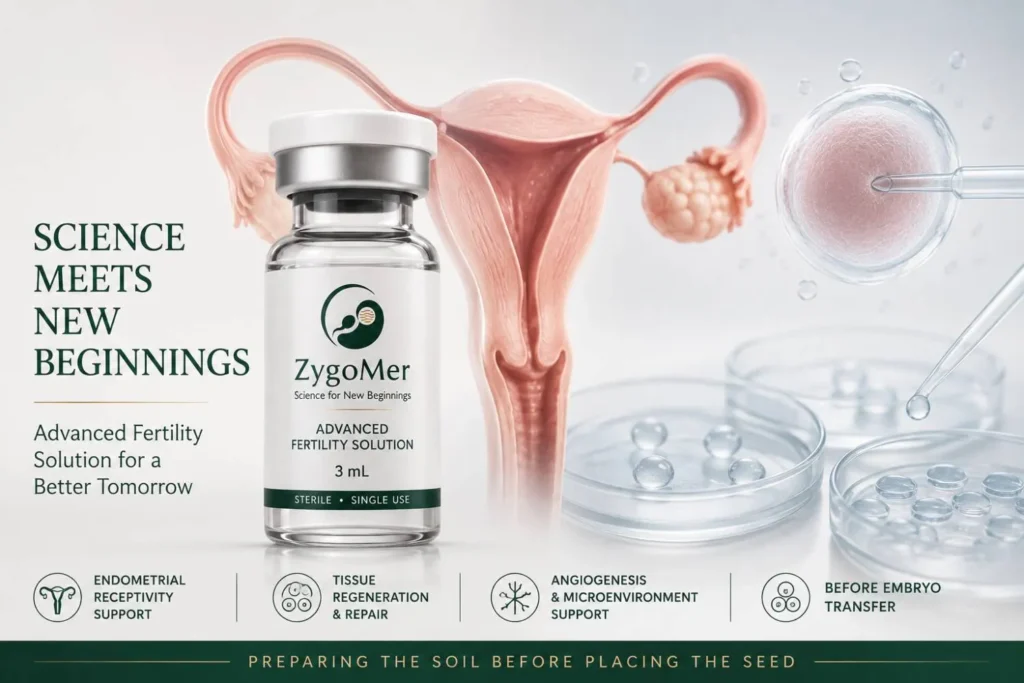
ZYGOMER
Preparing the soil before placing the seed.
PDRN × Endometrial Regeneration × Reproductive Medicine
The use of PDRN to enhance endometrial receptivity or implantation prior to embryo transfer remains investigational and requires validation through well-designed controlled clinical studies.
Scientific Rationale & Selected References
1. The effects of polydeoxyribonucleotide on wound healing and tissue regeneration: a systematic review of the literature.
Regenerative Medicine, 2020.
This systematic review evaluated 34 eligible preclinical and clinical studies and identified two principal mechanisms underlying PDRN-mediated tissue regeneration: adenosine A2A receptor activation and nucleotide salvage pathways. The findings support the regenerative rationale of PDRN through promotion of physiological tissue repair and remodeling.
2. Polydeoxyribonucleotide stimulates angiogenesis and wound healing in the genetically diabetic mouse.
Wound Repair and Regeneration, 2008.
PDRN treatment increased VEGF expression, CD31 immunostaining and angiogenic activity, while improving tissue remodeling and wound strength. Importantly, blockade of the adenosine A2A receptor abolished these effects, providing mechanistic evidence linking PDRN to A2A-mediated angiogenic signaling.
3. Polydeoxyribonucleotide restores blood flow in an experimental model of ischemic skin flaps.
Journal of Vascular Surgery, 2012.
PDRN enhanced VEGF expression, tissue perfusion and vascular recovery in ischemic tissue and promoted formation of fibroblast-rich granulation tissue. These findings provide further evidence for the potential of PDRN to support vascularization and tissue regeneration in compromised microenvironments.
4. Use of Intra-uterine Injection of Platelet-rich Plasma (PRP) for Endometrial Receptivity and Thickness: A Literature Review of the Mechanisms of Action.
Journal of Assisted Reproduction and Genetics, 2021.
This review specifically addresses endometrial receptivity, thin endometrium and recurrent implantation failure. Intrauterine regenerative therapy was associated in experimental and clinical literature with increased endometrial proliferation, cellular migration and regenerative signaling, supporting the broader concept of modifying the endometrial microenvironment before embryo implantation.
5. Effects of Intrauterine Infusion of Autologous Platelet-Rich Plasma in Women Undergoing Treatment with Assisted Reproductive Technology: A Meta-Analysis of Randomized Controlled Trials.
2023.
This meta-analysis evaluated randomized controlled trials of intrauterine PRP in women undergoing ART with thin endometrium or previous implantation/pregnancy failure. It provides clinical evidence supporting investigation of local regenerative modulation of the endometrium as an adjunctive strategy in assisted reproduction.
Summary
Collectively, these studies provide a mechanistic bridge between PDRN biology and regenerative approaches to endometrial preparation. PDRN has established preclinical evidence for A2A receptor-mediated signaling, VEGF-associated angiogenesis, tissue repair and inflammatory modulation, while reproductive-medicine studies using other regenerative interventions demonstrate that the endometrial microenvironment can potentially be therapeutically modulated before embryo transfer. Together, these findings provide a scientific rationale for investigating PDRN as a regenerative strategy for endometrial preparation; however, direct clinical evidence demonstrating that intrauterine PDRN improves implantation, clinical pregnancy or live-birth rates is still required.