- mesomer admin
- February 10, 2026
- skin and hair
- 0 Comments
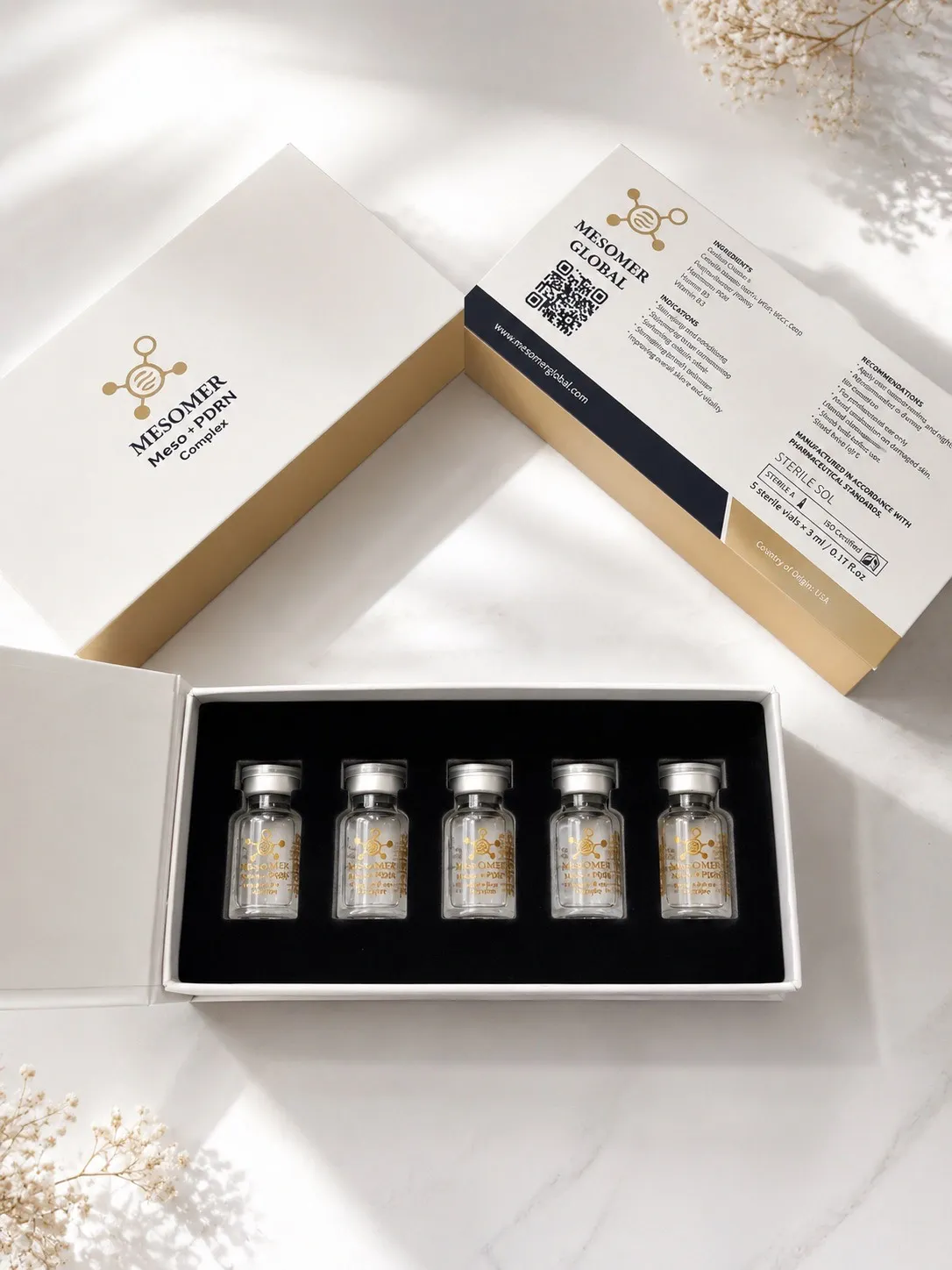
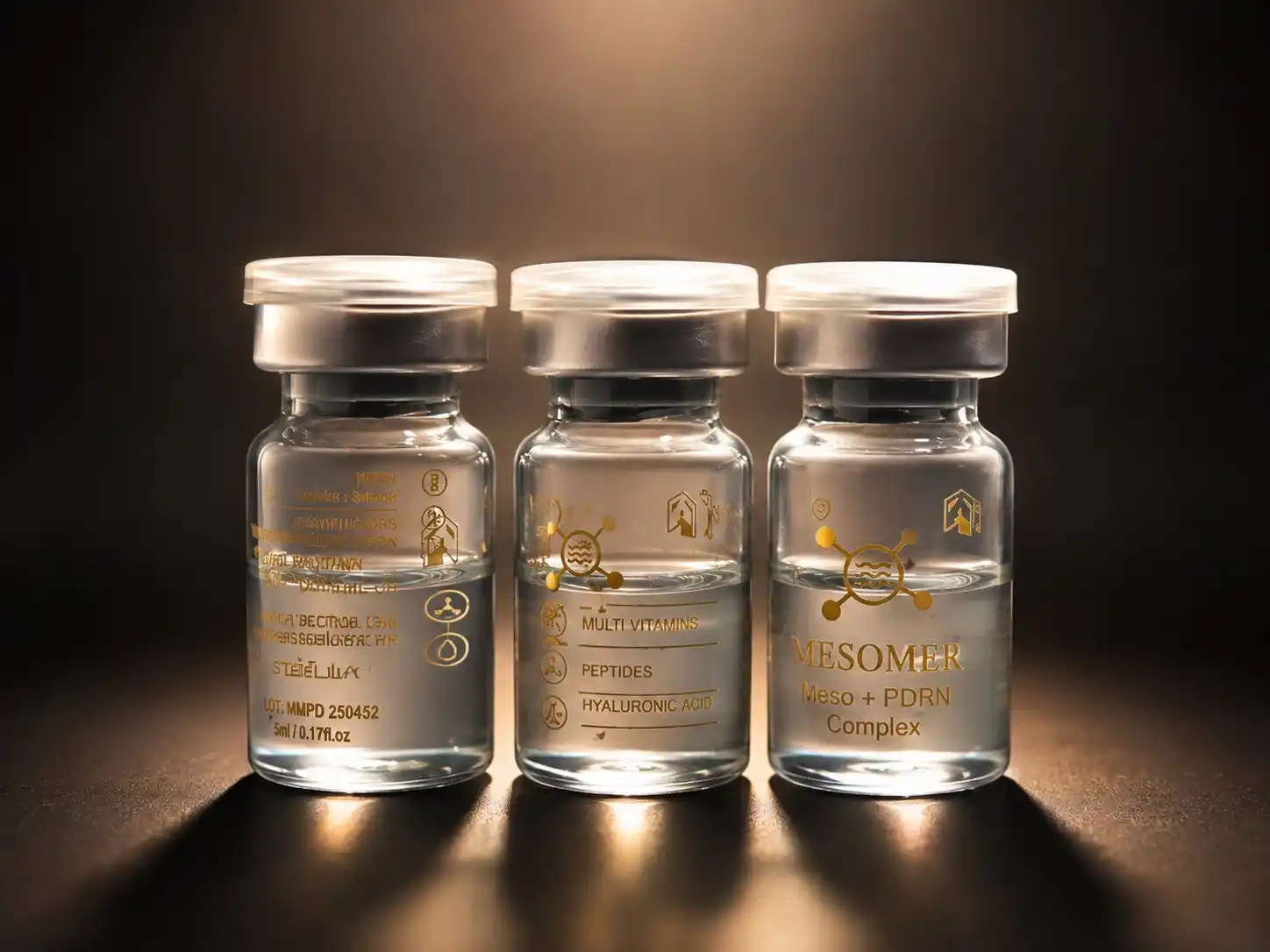
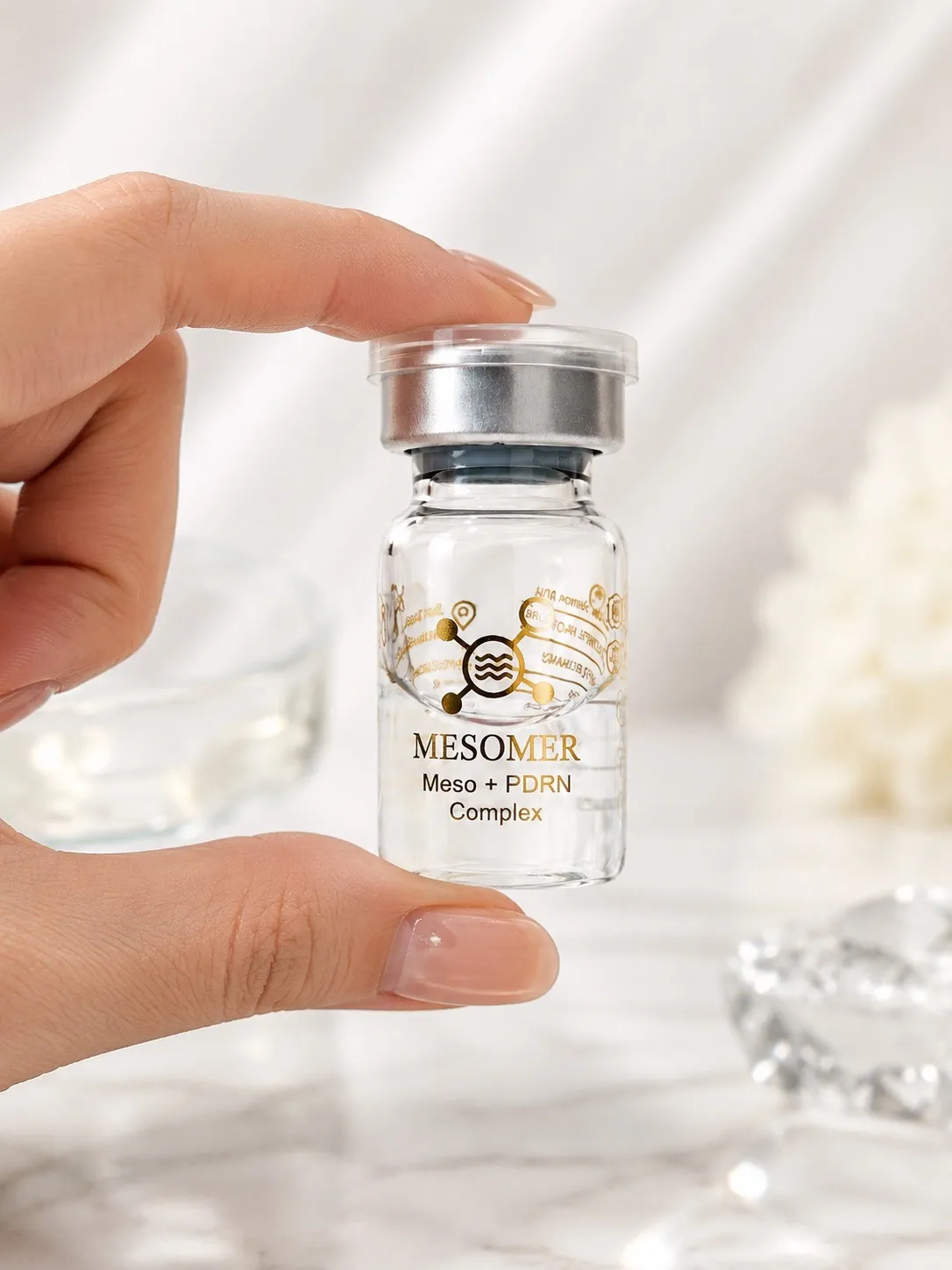
MesoMer™ is an advanced clinical-grade solution from the Meso + PDRN family
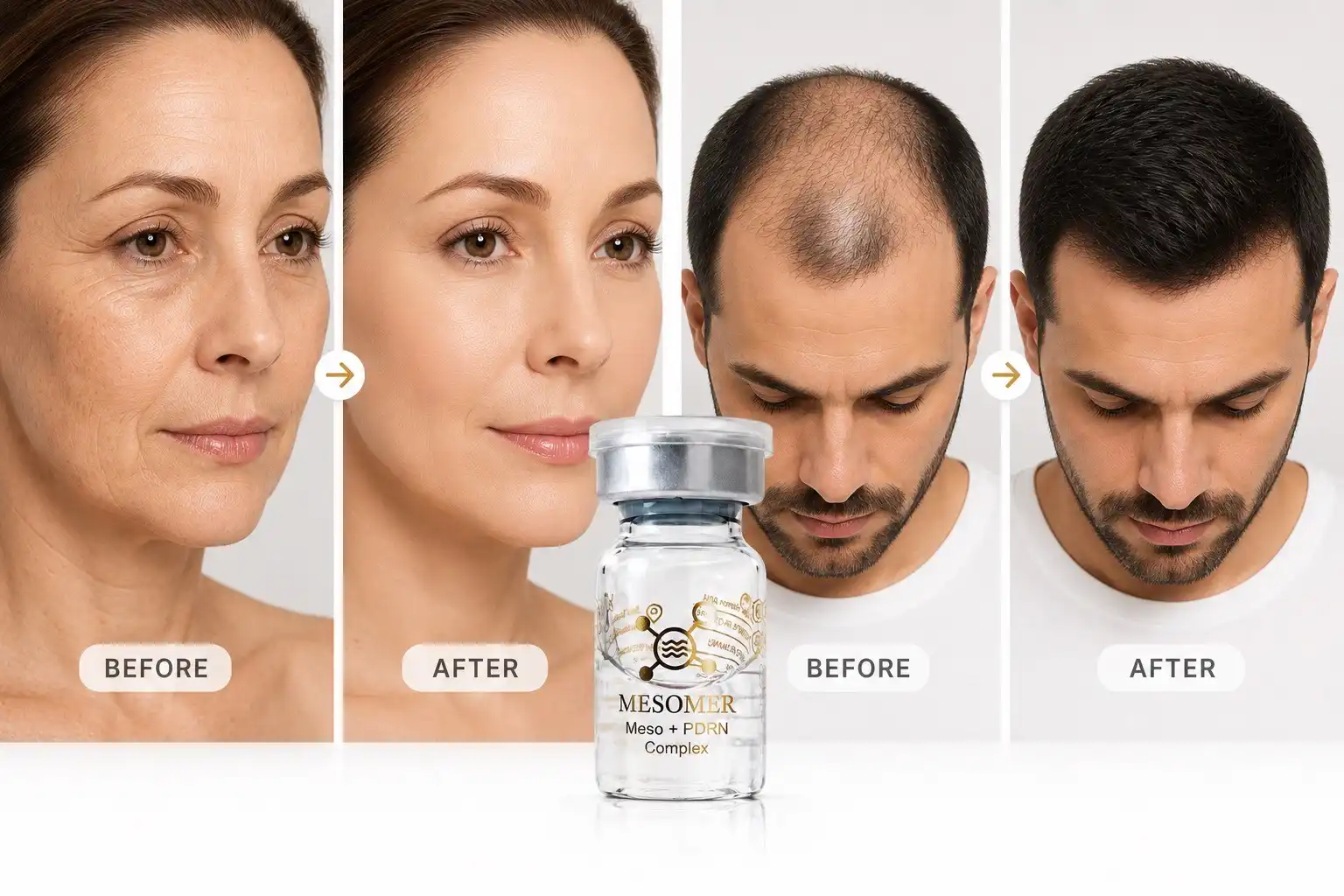
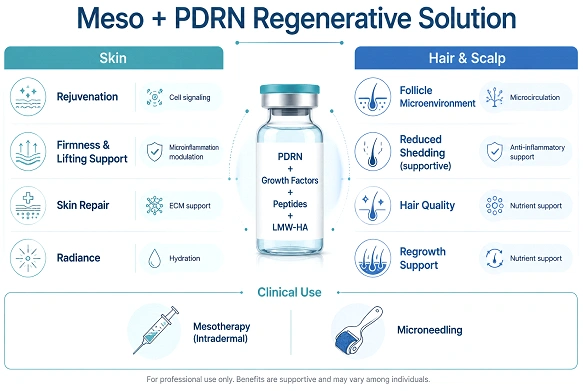
MesoMer™ is an advanced clinical-grade solution from the Meso + PDRN family, designed with a regenerative approach for skin rejuvenation, improvement of firmness and lifting, support for hair regrowth, and accelerated cellular repair.
This product is suitable for use by physicians and trained professionals in aesthetic medicine and can be used in combination therapy protocols.
Core Active Components and Mechanism of Action
Advanced PDRN (Polydeoxyribonucleotide)
PDRN serves as the mainstay of regenerative treatments in this formulation and plays a role in modulating inflammation and supporting tissue repair. Mechanistically, PDRN is mainly known for the following actions:
⦁ Activation of anti-inflammatory pathways, especially through the A2A adenosine receptor pathway, and modulation of tissue microinflammation involved in inflammaging and follicular dysfunction.
⦁ Support of cellular repair and metabolism through the provision of nucleotides via the salvage pathway under conditions of tissue stress.
⦁ Enhancement of the repair microenvironment, which may contribute to improved dermal quality and scalp condition.
Growth Factors: EGF, FGF, VEGF, IGF-1, PDGF
The growth factor complex in MesoMer is designed to enhance regenerative signaling and tissue remodeling. Each of these factors is conceptually associated with well-recognized roles:
⦁ EGF: supports epidermal regeneration and improves superficial repair processes
⦁ FGF: supports fibroblast activity and dermal remodeling
⦁ VEGF: enhances angiogenesis/microcirculation, with particular importance in dull or poorly perfused skin and the scalp
⦁ IGF-1: supports cellular metabolism and growth/survival pathways
⦁ PDGF: contributes to repair, regeneration, and wound healing-related processes
This component reflects a true focus of the formula on cell signaling, rather than merely hydration or short-term superficial effects.
Multivitamin Complex: A, B-Complex, C, E
The multivitamin complex acts as metabolic and antioxidant cofactors:
⦁ Vitamin A: helps epidermal turnover and regulates superficial regenerative pathways
⦁ B-Complex: supports cellular metabolism and tissue function
⦁ Vitamin C: plays a role in collagen synthesis and reduction of oxidative stress
⦁ Vitamin E: provides antioxidant protection and helps reduce damage caused by free radicals
This section has clinical value in improving dullness, skin fatigue, and overall tissue quality, especially in patients with a high oxidative burden (sun exposure, pollution, stress, smoking, and environmental damage).
Biomimetic Peptides: GHK-Cu, Acetyl Hexapeptide-8, Tripeptide-1
Biomimetic peptides are included in the formulation to improve ECM quality, regenerative signaling, and tissue optimization:
⦁ GHK-Cu: well known in the field of tissue repair, supporting remodeling and dermal quality
⦁ Acetyl Hexapeptide-8: a functional peptide aimed at improving the appearance of dynamic lines and refining the skin’s appearance
⦁ Tripeptide-1: a peptide associated with support of collagen pathways and dermal structure
This peptide complex plays a supportive role, especially in protocols targeting improved texture, fine lines, and skin firmness.
Hyaluronic Acid (LMW), Amino Acids & Antioxidants
⦁ Hyaluronic Acid (LMW): low-molecular-weight HA is considered a factor that improves intercellular hydration and matrix quality, and may provide a more favorable environment for regenerative responses.
⦁ Amino Acids: provide the necessary precursors for collagen/elastin synthesis and support remodeling.
⦁ Antioxidants: reduce oxidative burden and help control destructive processes associated with aging and chronic inflammation.
Therapeutic Positioning in Skin
MesoMer is more of a Skin Biostimulator / Regenerative Mesotherapy Solution than a purely “glow” or short-acting hydrating treatment.
Clinical Objectives for the Face and Neck
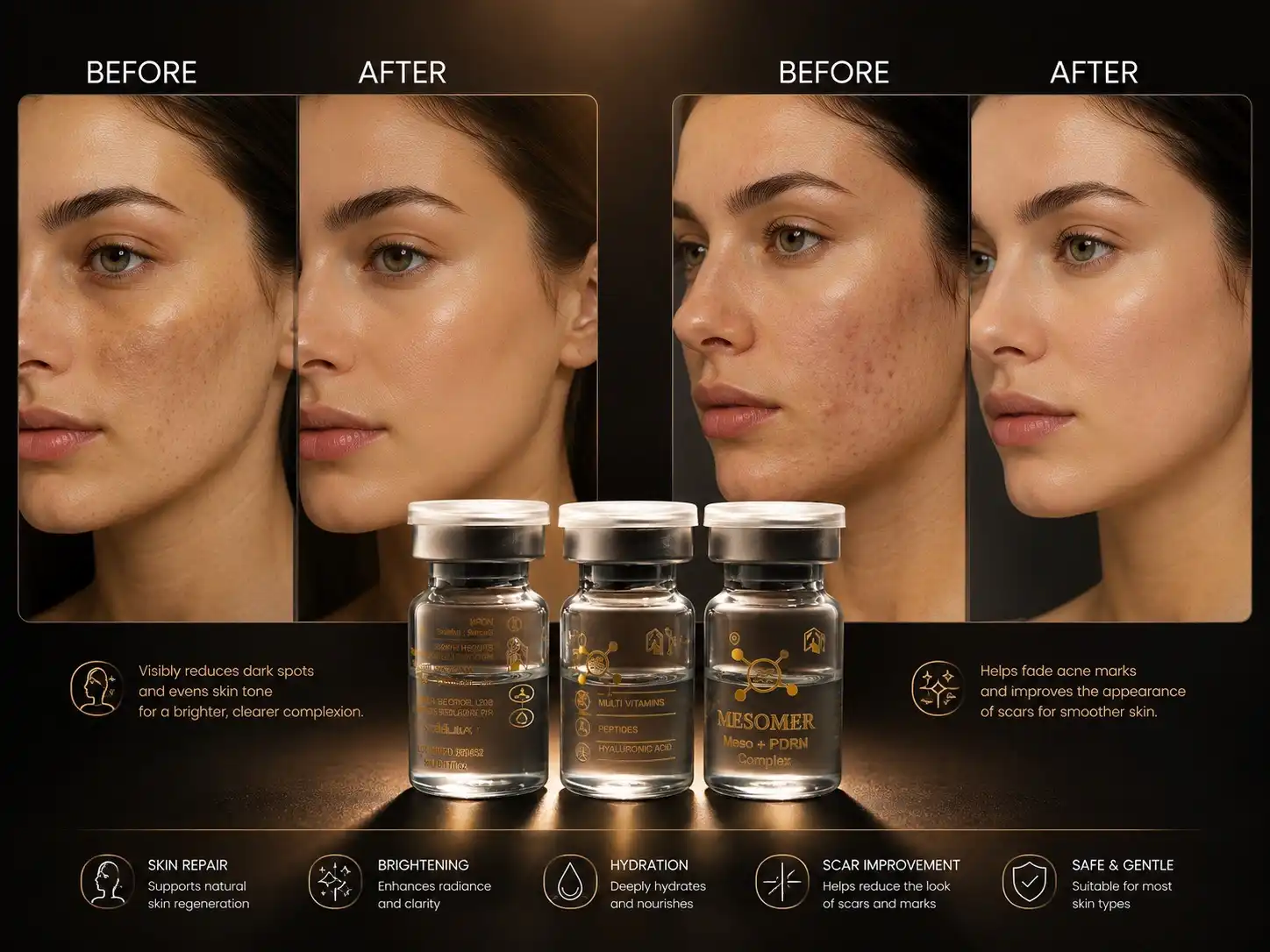
⦁ Skin rejuvenation: improvement in texture, radiance, and overall skin quality
⦁ Lifting/firming support: support for dermal firmness and improvement of mild to moderate laxity, within a combination treatment protocol
⦁ Reduction of dullness and signs of aging (inflammaging): modulation of microinflammation and oxidative stress
⦁ Skin repair: support for tissue repair, especially in recovery programs after energy-based or mechanical procedures, with appropriate indication and timing
Regarding pigmentation/hyperpigmentation: MesoMer’s role is mainly adjunctive; that is, by improving skin quality and reducing the inflammatory component, it may help optimize outcomes, but it is not considered a substitute for specific pigmentation treatments.
Therapeutic Positioning in Hair and Scalp
In trichology, the goal of MesoMer is to optimize the follicular microenvironment:
⦁ Hair follicle stimulation (supportive): enhancement of growth and repair signals
⦁ Reduction of hair shedding and stabilization: through reduced perifollicular inflammation and improved microcirculation
⦁ Improvement in hair quality: helping increase shaft thickness/quality as part of a treatment protocol
⦁ Hair regrowth support: supportive of regrowth, especially in combination protocols (depending on diagnosis: AGA/TE, etc., and disease stage)
Clinical Methods of Use
Mesotherapy (Intradermal Injection)
⦁ Can be used for the face, neck, and scalp
⦁ Common techniques: Micro-papule / Nappage (depending on physician preference and treatment area)
Microneedling (Use with Microneedling)
⦁ Used as a delivery method and to synergize with the regenerative response induced by needling
⦁ Suitable for skin repair, texture improvement, enhanced radiance, and scalp protocols, depending on diagnosis and patient tolerance
Summary
MesoMer is a multi-mechanism regenerative solution that, through the combination of Advanced PDRN + Growth Factors + Biomimetic Peptides + LMW-HA + Multivitamins + Amino acids/Antioxidants, enables physicians to design protocols for rejuvenation, improved firmness and lifting, tissue repair, and support for hair regrowth.
Its main advantage is its focus on cellular repair + signaling + microenvironment optimization in both skin and scalp.